
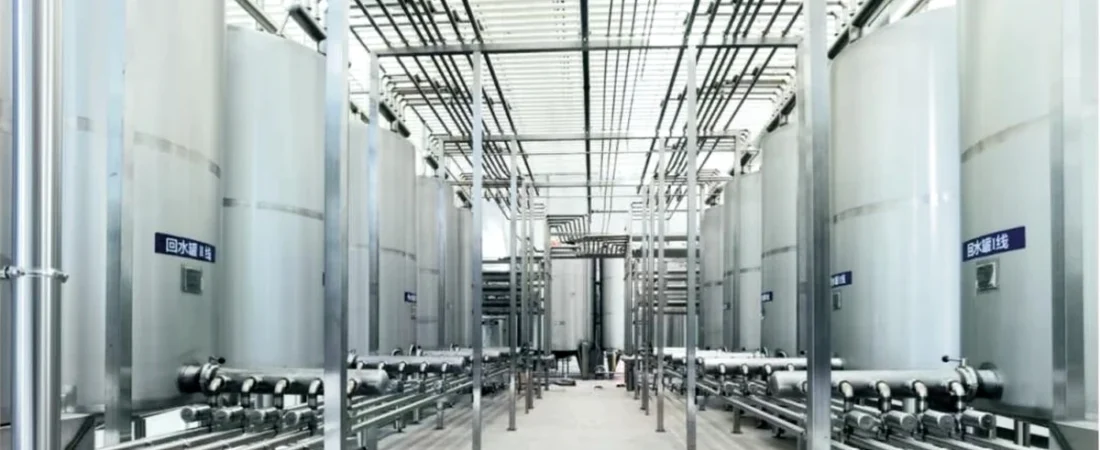
Cleaning tanks, pipelines and processing equipment is an essential part of maintaining hygienic and consistent production. A Clean-in-Place (CIP) system allows suitable equipment to be cleaned through controlled circulation of cleaning and rinsing solutions, reducing the need for routine disassembly.
Choosing the right CIP cleaning system depends on tank capacity, pipeline layout, product characteristics, cleaning requirements and production conditions. This guide explains the key configurations, components and selection factors to help manufacturers plan a suitable CIP solution for their processing lines.
What Is a CIP Cleaning System?
A Clean-in-Place (CIP) cleaning system is designed to clean the internal product-contact surfaces of tanks, pipelines and connected processing equipment without requiring routine disassembly. It is commonly used in food, beverage, dairy, pharmaceutical and chemical processing applications where suitable equipment design and cleaning procedures are essential.
A typical CIP process may include pre-rinsing, detergent circulation, intermediate rinsing and final rinsing. Depending on the production requirements, additional sanitation steps may be included. Cleaning performance depends on factors such as solution temperature, chemical concentration, circulation flow and contact time.
CIP systems can be configured with cleaning solution tanks, sanitary pumps, heating arrangements, valves, piping and control systems. The appropriate configuration depends on the equipment being cleaned and the specific process requirements.
How Does a CIP System Work?
A CIP system circulates water and cleaning solutions through connected tanks, pipelines and processing equipment. A sanitary pump provides the required circulation flow, while valves and controls direct the cleaning liquid through the selected equipment.
A typical CIP cleaning process includes the following stages:
1. Pre-Rinsing
Water is circulated through the equipment to remove loose product residues before chemical cleaning.
2. Detergent Cleaning
A suitable cleaning solution is circulated through the equipment to remove product deposits, oils and other residues. The cleaning chemical, temperature and circulation time depend on the application.
3. Intermediate Rinsing
Water is used to remove residual cleaning chemicals before the next cleaning or rinsing stage.
4. Final Rinsing
The equipment is rinsed with water of suitable quality to remove remaining cleaning solution. Additional sanitation steps may be required depending on the process and hygiene standards.
The complete cleaning sequence can be adjusted according to product characteristics, equipment design and production requirements.
Key Components of a CIP Cleaning System
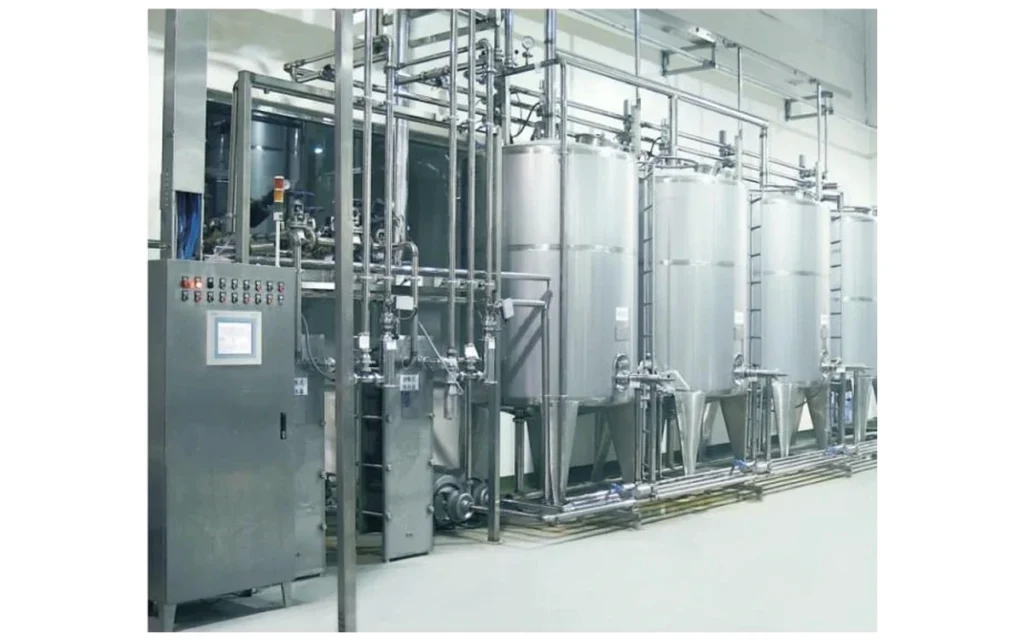
A CIP cleaning system generally consists of cleaning solution tanks, sanitary pumps, heating equipment, valves, pipelines and a control system. The specific components depend on the cleaning process, equipment layout and required level of automation.
1. Cleaning Solution Tanks
Stainless steel tanks are used to prepare, store and supply cleaning or rinsing solutions. Depending on the application, a CIP system may include separate tanks for water, alkaline cleaning solutions and acid cleaning solutions.
2. Sanitary Circulation Pumps
Sanitary pumps circulate cleaning solutions through tanks, pipelines and connected processing equipment. Pump selection depends on the required flow rate, pressure, pipeline arrangement and cleaning conditions.
3. Heating System
Heating equipment helps maintain the required cleaning solution temperature. Electric heating, steam heating or other suitable heating arrangements can be selected according to available utilities and process requirements.
4. Valves and Sanitary Pipelines
Sanitary valves and pipelines control the direction of cleaning solution flow and connect the CIP system to the equipment being cleaned. Suitable connections and piping arrangements are important for effective cleaning and drainage.
5. Control System
The control system manages cleaning sequences and operating parameters. Depending on the configuration, functions may include temperature monitoring, pump operation, valve control and automated cleaning programs.
The appropriate combination of these components should be determined according to the customer’s production process, hygiene requirements and existing equipment.
How to Choose the Right CIP Cleaning System?
Selecting a suitable CIP cleaning system requires careful consideration of the processing equipment, pipeline arrangement, cleaning conditions and production requirements. The following factors can help manufacturers determine the appropriate configuration.
1. Equipment and Tank Capacity
Identify the tanks, pipelines and processing equipment that require cleaning. Tank capacity, equipment quantity and cleaning circuit arrangement help determine the required cleaning solution volume and system configuration.
2. Cleaning Flow Rate and Pipeline Layout
The circulation pump should provide sufficient flow and pressure for the connected cleaning circuits. Pipeline diameter, length, fittings and cleaning devices must be considered when selecting the pump and piping arrangement.
3. Cleaning Temperature and Chemicals
Different products may require different cleaning solutions, temperatures and contact times. The CIP system should be configured according to the product residues, cleaning chemicals and material compatibility requirements.
4. Heating Method and Available Utilities
Electric heating and steam heating are common options for CIP systems. The appropriate method depends on the available utilities, cleaning temperature requirements and operating conditions.
5. Automation and Production Integration
CIP systems can be configured with manual, semi-automatic or automatic controls. Automation requirements should be determined according to the cleaning process, production schedule and integration needs.
Before requesting a quotation, manufacturers should provide the equipment capacity, pipeline information, product characteristics, available utilities and preferred control method. These details help determine a suitable CIP system configuration.
Typical Applications of CIP Cleaning Systems
CIP cleaning systems are widely used in liquid processing industries where tanks, pipelines and production equipment require regular internal cleaning. System configurations can be customized according to different products, hygiene requirements and production processes.
1. Food and Beverage Processing
CIP systems can be used to clean suitable mixing tanks, storage tanks, transfer pipelines and processing equipment in beverage, juice, syrup and liquid food production lines.
2. Dairy and Sauce Production
Dairy products, sauces and other viscous food materials may leave residues on equipment surfaces. Properly designed CIP systems help clean connected tanks, pipelines and processing equipment, depending on product characteristics and cleaning requirements.
3. Cosmetics and Personal Care
CIP cleaning systems can support the cleaning of suitable mixing vessels, emulsifying tanks and transfer pipelines used in shampoo, lotion, liquid soap and other personal care product manufacturing.
4. Pharmaceutical and Chemical Processing
CIP systems may be configured for compatible pharmaceutical and chemical processing equipment. Cleaning procedures, material compatibility and any applicable validation or compliance requirements must be evaluated for each application.
Different industries require different cleaning temperatures, circulation flow rates, chemicals and automation levels. The appropriate CIP system should be selected based on the actual processing conditions and cleaning requirements.
Frequently Asked Questions About CIP Cleaning Systems
1. Can a CIP system clean tanks and pipelines without disassembly?
Yes. CIP systems are designed to clean the internal surfaces of compatible tanks, pipelines and processing equipment without routine disassembly. However, cleaning effectiveness depends on equipment design, circulation conditions and the selected cleaning procedure. Certain components may still require manual inspection or cleaning.
2. Is a CIP cleaning system suitable for viscous products?
CIP systems can be configured for equipment processing sauces, syrups, dairy products and other viscous materials. The cleaning process must consider product residues, circulation flow, cleaning temperature and suitable detergents. Additional cleaning steps may be required for difficult residues.
3. How many tanks are required for a CIP cleaning system?
The number of tanks depends on the cleaning process and production requirements. A simple CIP system may use a single cleaning tank, while larger systems can include separate tanks for rinsing water, alkaline solutions and acid solutions.
4. Can one CIP system clean multiple production tanks?
Yes. A properly designed CIP system can serve multiple tanks or processing lines through suitable piping and valve arrangements. Cleaning circuits, operating sequences and required circulation capacity must be considered during system design.
5. What information is required for a CIP system quotation?
To recommend a suitable CIP cleaning system, manufacturers should provide tank capacities, equipment quantities, pipeline diameters and lengths, product characteristics, available heating utilities and preferred automation requirements.
Additional details about cleaning chemicals, operating temperatures and existing production equipment can help determine the appropriate system configuration.
Explore Our Fully Automatic CIP Cleaning Systems
ZHONGHAO MACHINERY provides customized automatic CIP cleaning systems for tanks, pipelines and connected processing equipment. Available configurations include single-tank, double-tank, three-tank and four-tank systems, with suitable pumps, heating arrangements, valves and automatic controls.
Explore our Fully Automatic CIP Cleaning System to learn more about available configurations and technical specifications.
Need a CIP Cleaning System for Your Production Line?
Tell us your tank capacities, pipeline dimensions, product characteristics, cleaning requirements and preferred automation level. Our team will help you select a suitable CIP system and prepare a customized quotation.