.png)
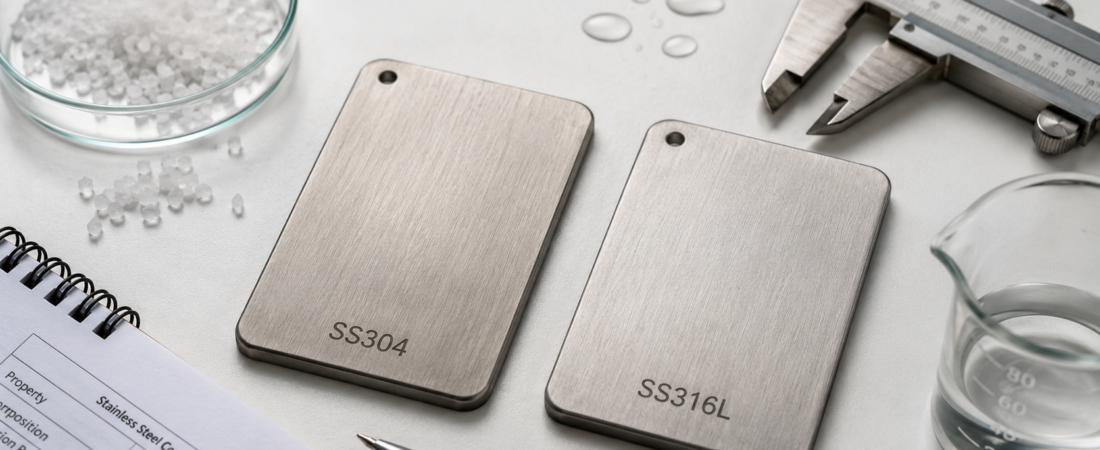
SS304 vs SS316L is one of the most common material selection questions for stainless steel tanks, mixers and processing equipment.
Stainless steel is widely used for tanks, mixers, filters, pumps and other processing equipment. For many food, cosmetic, pharmaceutical, chemical and daily chemical projects, buyers often need to choose between SS304 and SS316L.
Both materials can be used for industrial processing equipment, but they are not the same. The right choice depends on the product, process conditions, cleaning method, corrosion risk and budget.
What Is SS304 Stainless Steel?
SS304 is a commonly used stainless steel material for general processing equipment. It has good corrosion resistance, good mechanical strength and stable performance in many liquid and paste processing applications.
For many food, beverage, cosmetic and daily chemical products, SS304 is often a practical and cost-effective choice. It is commonly used for mixing tanks, storage tanks, cooking tanks, filters, platforms and pipelines.
Typical applications of SS304 include water, juice, syrup, shampoo, detergent, lotion, sauce and many general chemical liquids.
What Is SS316L Stainless Steel?
SS316L is a higher-grade stainless steel material with better corrosion resistance than SS304. The “L” means low carbon, which helps improve corrosion resistance after welding.
SS316L is often selected when the material being processed is more corrosive, contains salt, acid, alkali or active ingredients, or when the equipment needs higher hygiene and corrosion resistance.
It is commonly used in pharmaceutical liquids, high-end cosmetics, salt-containing products, acidic materials, some chemical liquids and more demanding sanitary processing systems.
Main Difference Between SS304 and SS316L
The main difference between SS304 and SS316L is corrosion resistance. SS316L contains molybdenum, which gives it better resistance to certain corrosive environments.
In simple terms, SS304 is suitable for many general processing applications. SS316L is better for more corrosive materials, higher hygiene requirements or stricter production environments.
However, SS316L is usually more expensive than SS304. For this reason, the material should be selected based on real production needs instead of simply choosing the highest-grade option.
How to Choose the Right Material
When choosing between SS304 and SS316L, buyers should consider product material, cleaning method, temperature, process conditions, industry requirements and budget.
For general liquids such as water, juice, syrup, shampoo or detergent, SS304 may be enough. For acidic, salty or corrosive materials, SS316L may be more suitable.
If the equipment requires frequent cleaning, high-temperature cleaning or CIP cleaning, material selection becomes more important. SS316L may provide better long-term corrosion resistance in some cleaning conditions.
Heating, cooling, vacuum, pressure and long production cycles can also affect material selection. Higher temperature or stronger process conditions may require a more careful material choice.
Industry Requirements
Different industries may have different expectations for stainless steel material.
Food and beverage projects often use SS304 for general liquid processing.
Cosmetic and personal care projects may use SS304 or SS316L depending on the formula and hygiene requirements.
Pharmaceutical liquid products usually require more careful material selection, and SS316L is often preferred for product contact parts.
Chemical liquid projects should be evaluated based on corrosion risk, temperature and cleaning conditions.
Common Material Configurations
For customized processing equipment, the material can be selected according to different contact areas.
Product contact parts can be made of SS304 or SS316L.
Outer layers are commonly made of SS304.
Frames or platforms can be made of SS304 or carbon steel, depending on project requirements.
Pipelines and valves can be selected in SS304 or SS316L according to the product and cleaning conditions.
This flexible configuration helps balance performance, hygiene and cost.
What Information Should You Provide Before Quotation?
To select a suitable material, it is helpful to provide the following information:
Product name and material properties
Viscosity and temperature
Whether the product contains salt, acid or alkali
Heating or cooling requirements
Cleaning method
Industry and production standard
Required capacity
Working pressure or vacuum requirement
With this information, the equipment supplier can recommend a more suitable material configuration.
Conclusion
SS304 and SS316L are both widely used for stainless steel processing equipment. SS304 is practical and cost-effective for many general applications, while SS316L is more suitable for corrosive materials, stricter hygiene requirements and demanding production conditions.
For customized tanks, mixers, filters and processing systems, the best choice should be based on the actual product, process and budget. If you are not sure which material to choose, Zhonghao Machinery can help evaluate a suitable configuration based on your material and process requirements.